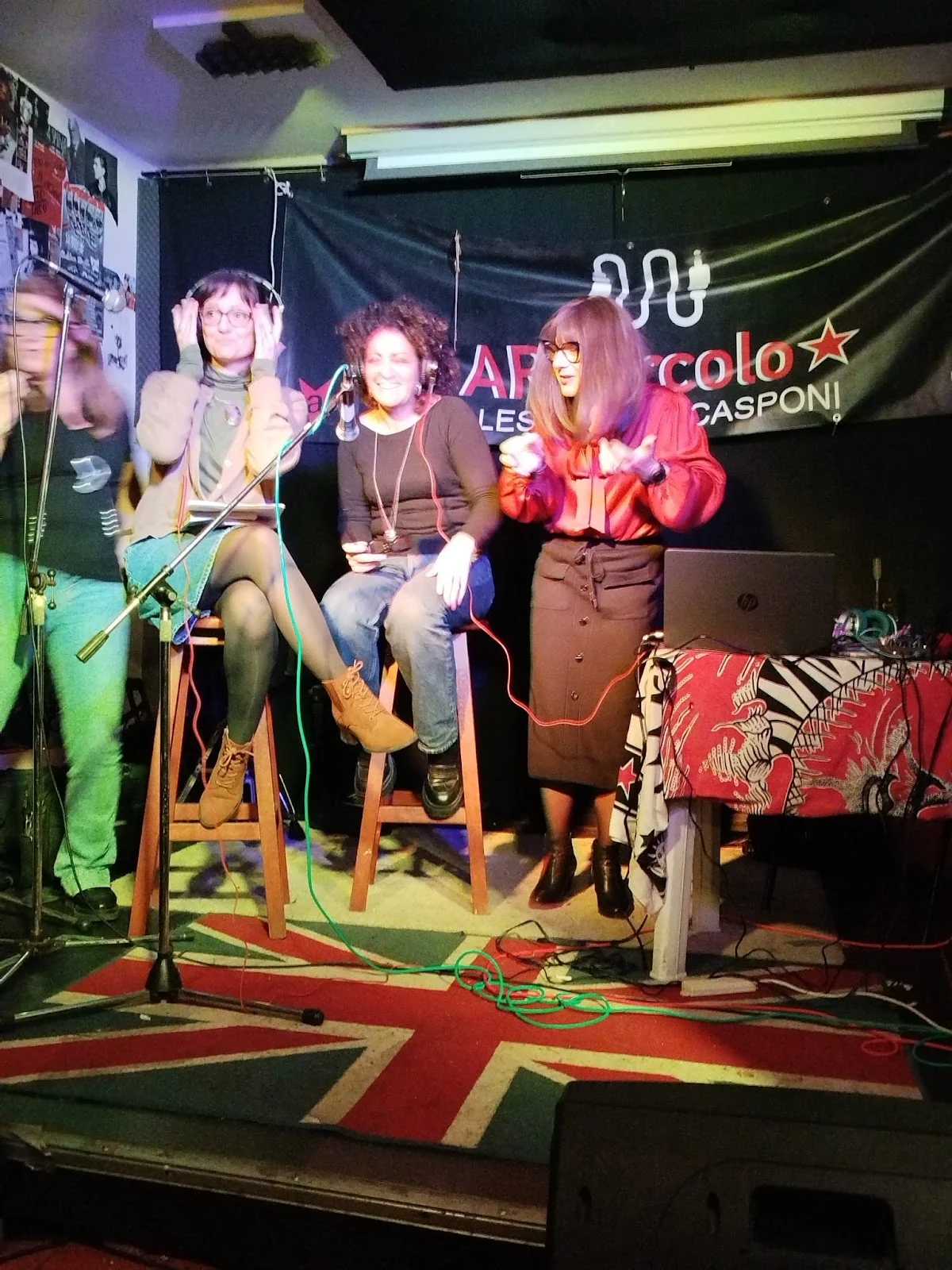
Diana Amaterasu e la co-conduttrice Laura Ingrassia incontrano Lili Refrain. Dai loop costruiti dal vivo al rapporto fra voce e parole, dai sogni alle copertine illustrate: una conversazione a tre su trasformazione, viaggio e comunità.
Nota editoriale — Questa conversazione è stata riadattata alla lettura a partire dalla trascrizione della registrazione. Sono stati corretti errori di trascrizione, eliminati intercalari e ripetizioni e ricomposti passaggi interrotti o sovrapposti. Alcuni scambi e digressioni sono stati abbreviati o omessi. Il testo conserva il senso e il tono del dialogo, ma non è una riproduzione parola per parola. Opinioni ed esperienze personali restano attribuite alle persone che le esprimono; età, numeri, progetti e riferimenti temporali si riferiscono al momento della registrazione. Gli inserti musicali e la promozione iniziale dei concerti sono disponibili nella registrazione originale.
Benvenuta a bordo
Diana: Trasmissioni da Orbita Bassa: persone che fanno cose, persone competenti e incompetenti, persone che capitano qui per caso e persone che ci onorano con la loro presenza. A volte, prima di registrare, ci intratteniamo per ore: si rivelano ancora più piacevoli di come ce le eravamo immaginate e danno luogo a conversazioni che vorremmo non finissero mai. Una di queste persone è Lili Refrain. Benvenuta a bordo!
Lili: Grazie, sono molto felice di essere qui.
Diana: Con noi c’è anche Laura Ingrassia: antropologa, DJ, speaker, digitalizzatrice di antiche pergamene. Io pensavo che ti occupassi di permanenti, ma la mia ignoranza è pari soltanto alla mia arroganza. Lili, invece, oltre a essere un’artista di altissimo livello, è estremamente alla mano. Essere umili non significa non essere consapevoli delle proprie abilità.
Laura: La sua produzione è davvero varia: momenti lirici, percussivi, tribali, fino alle derivazioni metal che adoro. Le recensioni le trovi su tutti i tipi di giornali musicali.
Diana: Ho assistito a un tuo concerto: una performance coinvolgente, spirituale, emotiva, con musiche che sono ogni volta diverse perché i loop vengono costruiti in tempo reale. Da qui la mia domanda terribile: quando devi scegliere un pezzo e metterlo su un disco, come fai a fissare qualcosa che dal vivo continua a cambiare?
Scrivere per strati
Lili: Quando scrivo musica lo faccio esattamente come poi la suono: tutto nasce per strati. L’ispirazione può venire da un sogno, da un’immagine, da tante cose. Forse anche per questo non sono relegata a un genere unico.
All’inizio lavoravo su cassetta. La chitarra è stato il mio primo strumento e sono partita dal metal: quella è stata la mia scuola. Da autodidatta cercavo di imitare i miei chitarristi preferiti. Per esercitarmi registravo un riff o un arpeggio sullo stereo, lo rimettevo in play e ci suonavo sopra un assolo. Poi ho continuato con un Tascam, che mi dava più piste, finché ho scoperto la loop station: mi permetteva di sovrapporre le chitarre e continuare a farlo. Quello che era un esercizio è diventato composizione.
Ho cominciato per gioco, senza pensare che vent’anni dopo sarebbe diventata tutta la mia vita. Mi piaceva mettere uno sull’altro questi specchi della mia personalità. Suonare era, ed è, una sorta di diario di bordo. Inizialmente la voce non c’era: le chitarre erano la mia estensione emotiva. Poi, attraverso un lavoro su me stessa e sulla riconnessione con tante parti di me, ho iniziato ad aggiungere anche la voce.
Diana: Una voce che suona benissimo anche nel parlato. Quando mi hai mandato il primo vocale per organizzare l’intervista, sono rimasta incantata.
Laura: Lo ascoltavi in loop!
Diana: Esattamente. Le cassette mi ricordano i racconti di Klaus Schulze sui registratori a bobina: si tagliavano sezioni di nastro e si univano con lo scotch, creando un anello che ripeteva lo stesso pezzo.
Lili: I primi loop nascevano proprio così, da un nastro circolare. Anche Robert Fripp, che per me è stato una grandissima ispirazione, ne ha fatto molto uso.
L’errore entra nel concerto
Lili: Tutto ciò che fai in tempo reale è unico: a meno che tu non lo stia registrando, non tornerà mai uguale a se stesso. Non usare computer o tracce preregistrate è una scelta consapevole. È rischioso, la possibilità di sbagliare è alta, ma è proprio quello su cui mi piace giocare. In inglese, to play significa sia suonare sia giocare.
Così non mi annoio a rifare sempre la stessa cosa e chi è sul palco si trova sullo stesso livello di chi è fuori: nessuno sa esattamente che cosa succederà nel prossimo loop. In stanze piccole sono entrati nel microfono starnuti, abbai di cani, persino il rumore di me che mi soffiavo il naso.
Diana: Se riusciremo a ospitare una tua performance al circolo di Pomezia, sappi che da noi a volte rientra anche lo sciacquone.
Lili: Fantastico! Mi piace quando capitano questi “incidenti di percorso”. Invece di cancellare l’errore, è bello svilupparlo, dargli una dignità, una vita diversa.
Una volta in Toscana ero raffreddatissima. Usavo soltanto chitarra e voce, avevo il delay acceso e, soffiandomi il naso, ho fatto entrare nel microfono una specie di sirena da nave. Tutti ridevano, me compresa. Ormai la figura l’avevo fatta: sono andata in mezzo al pubblico, ho distribuito fazzoletti e ho chiesto alle persone di soffiarsi il naso insieme a me. È nata una suite che si chiamava Delay Your Nose, sulla quale ho cominciato a cantare. Anche il pubblico era diventato parte della musica: il processo del loop lo puoi estendere a chi vuoi, è molto inclusivo.
Controllare, fino a perdere il controllo
Laura: Quello che fai sembra una performance rituale. C’è un farsi flusso, una comunicazione che esce da te, arriva al pubblico e ritorna. La musica cresce strato su strato; i loop e i delay diventano quasi un movimento sciamanico. Anche gli abiti, il trucco, la pittura facciale portano fuori dal quotidiano. Oggi staccare tutto ed entrare davvero in questa corrente è molto difficile: per me è un valore enorme.
Lili: Grazie, mi emoziona sentirti parlare così. Penso che la musica ci faccia trascendere: la ascoltiamo anche per riconnetterci con le emozioni e con una nostra verità che perdiamo tra tutte le cose da fare e da pensare. Siamo stratificati anche noi. Nel tempo, oltre a chitarra e voce, ho introdotto le percussioni: hanno una carica rituale e tribale molto connessa alla dimensione terrena.
Diana: C’è chi paragona il cuore al primo grande tamburo. Con buona pace degli amanti del progressive e dei tempi dispari, un buon quattro quarti…
Lili: Ci sono anche cuori che vanno in dispari! Quando il loop comincia a stratificarsi crea una sorta di mantra: la ripetizione favorisce quella dimensione di trance. Sul palco, però, gestisco cinque loop station diverse in tempo reale e serve un controllo gigantesco. È un controllo che mi serve per poterlo perdere. So benissimo dove sono, talmente tanto da non esserci più. È difficile da spiegare.
Diana: Qualcuno lo chiamerebbe essere nel flow.
Laura: C’è anche un uscire un po’ da se stessi?
Lili: Mi piace piuttosto mantenere la dimensione quotidiana e personale da una parte, e il palco dall’altra: lì accade un evento straordinario, in una sfera diversa. Gli abiti e il trucco di scena appartengono a questo spazio.
Laura: Anche nei video c’è un’entità legata alla terra e agli elementi. In Nagal ho visto tre figure che alla fine si ricongiungono.
Lili: La figura bionda è Leonardo, un ragazzo. Siamo fuori dal dualismo maschio-femmina: ci sono tanto femminile, tanta terra e acqua. La connessione terrena è fortissima anche nel mio carattere. Mi piace scendere nel viscerale più che salire nell’etereo, poi cerco di unire le due componenti a modo mio.
Il trucco sul volto è arrivato con Mana. Prima mi vestivo e mi acconciavo in un certo modo, ma non avevo quel trucco. Nascondere gli occhi era anche un modo per rivelare una visione interiore, accedere all’invisibile. In quel disco c’era la volontà di incontrare una natura più primitiva, connessa e tribale.
La voce prima delle parole
Diana: Amo molto la musica strumentale. A volte faccio ascoltare qualcosa che per me è pazzesco e mi chiedono: “Ma di che parla?”. La tua musica, invece, suscita le storie interiori di chi ascolta: per me significa farsi canale, lasciarsi attraversare da qualcosa. Non sento la necessità di aggiungere parole.
Lili: La parola è già suono. Indipendentemente dal significato, ogni consonante e ogni vocale porta un’immagine. Se dici “ah” oppure “oh”, non stai dicendo niente e stai dicendo tutto. Personalmente, nella musica spesso non ho bisogno di un’ulteriore storia: la musica mi sta già portando da qualche parte. Alcuni suoni toccano le mie corde interiori e mi mostrano cose; altri no. È sempre soggettivo.
Diana: Mi fa pensare al confronto con ciò che avviene dentro di noi, con i propri demoni: ansie, paure, vecchi traumi.
Laura: Ma c’è anche il daimon: nella lettura di Hillman è ciò che non ti dà pace finché non realizzi la tua aspirazione, la tua strada. Non è necessariamente qualcosa di negativo, è qualcosa di potente.
Lili: Sono d’accordo. Anche l’ombra può non farti stare bene in quel momento e, allo stesso tempo, guidarti verso altro. Senza l’ombra, come sapresti dov’è la luce? Chiedersi da dove nasce qualcosa, quando è cominciato, quando lo provi, può portarti a una soglia da attraversare, se vuoi crescere e trasformarti.
Nagalite: cambiare pelle
Diana: La trasformazione è centrale nel tuo nuovo disco, una suite in quattro parti. Il serpente, l’abbandono della vecchia pelle, gli strati successivi: mi sembra che anche tu abbia vissuto nel tuo percorso artistico ciò che esprimi nella musica. Eri consapevole di queste trasformazioni mentre avvenivano?
Lili: Sono tante domande in una!
Diana: Cerco di dire quattro cose e poi lasciarti fluire, altrimenti parlo io.
Lili: Nagalite è uscito a marzo e, nel momento in cui ne parliamo, sono passati pochi mesi: non ho ancora la distanza necessaria per raccontarlo in modo distaccato. Sono molto dentro questo lavoro. Alcuni brani mi hanno messa emotivamente alla prova, soprattutto l’ultimo, Lithos, che dura dodici minuti. È uno dei primi in cui ho scelto di usare parole e un testo preciso. Questa volta volevo proprio dire una cosa.
Diana: Zitti tutti, devo dire una cosa!
Lili: Eh sì, che responsabilità. Dare a quel brano un corpo non solo sonoro, ma anche verbale, mi ha messa alla prova. Quando l’ho registrato sono stata in lacrime per tutto il tempo. Nel mondo stanno accadendo cose aberranti, violentissime, che ci toccano profondamente: che lo accettiamo o no, siamo connessi. Non voglio parlare per tutti, ma non credo che stiamo vivendo un momento felice della nostra esistenza. Su di me ha un impatto forte.
Il disco è nato anche dal tentativo di sublimare questo dolore. Non guardo soltanto il mio piccolo microcosmo, ma il mondo che mi circonda e mi rende ciò che sono: lo immagino come un enorme corpo serpentino in perpetua mutazione, che ora collassa perché non riesce a cambiare pelle e a rigenerarsi. Dovremmo concederci di fermarci e chiederci quale futuro ci aspetta se continuiamo a non vedere, non sentire, non essere parte di questa connessione. A volte smettiamo di provare emozioni per difenderci, perché sono troppo intense: ci meccanicizziamo, diventiamo automi, viviamo più dentro lo schermo che fuori.
Connessione, sguardi e comunità
Diana: È paradossale parlare di connessione perduta nell’epoca della “superconnessione”. A volte gli strumenti posti fra una persona e l’altra interrompono il fluire: perdiamo il rapporto con la terra e la capacità di guardarci negli occhi. Chi ascolta sente un’intervista audio, ma noi siamo sedute a triangolo e passiamo metà del tempo a scambiarci sguardi. Quando controllo i livelli sul mixer mi sento quasi in colpa, perché Lili continua a guardarmi mentre parla e mi chiama a restituire quello sguardo.
Non sto rimpiangendo un passato migliore: ci sono stati tempi orrendi, bombe atomiche, fosse comuni. Stiamo parlando di ciò che va male nel nostro tempo. Noi siamo cresciute quando alcune cose sembravano andare meglio e ora sentiamo questa risacca, un mare che si allontana dai piedi.
Lili: Il respiro della terra è una cosa; continuare a compiere gli stessi errori è un’altra. Se possiamo studiare, informarci e apprendere, dovremmo saper fare meglio. Abbiamo superato catastrofi tremende e ci sarà sempre un’energia che si opporrà a questa schifezza. Ma dovremmo anche poter evitare qualcosa: essere abbastanza intelligenti, emotivamente e razionalmente, da capire dove ci porteranno certe azioni.
Mi dispiace non vedere ancora questa possibilità di trasformarci in meglio, volerci bene, stare insieme come comunità. Viviamo nella stessa casa, sullo stesso pianeta. Non voglio fare un discorso fricchettone: abbiamo un senso comunitario nel nostro piccolo gruppo di amici, ma siamo un’umanità enorme. Dovremmo riuscire a renderlo di nuovo collettivo.
Diana: Quanto possono essere larghe le nostre braccia, per abbracciare più persone possibile?
Lili: Le braccia sono immense. Il problema non sono le braccia, è il cuore.
Abitare le soglie
Diana: È difficile districare il buono e il cattivo. La rete ha permesso a chi è in minoranza nella propria comunità di sentirsi parte di una comunità più grande. Prima potevo sentirmi sola nella mia identità di genere, mentre ora conosco persone simili a me a Milano o a Helsinki. È un aspetto positivo enorme.
Ma possiamo anche perdere la capacità di vivere la diversità nella comunità fisica che abbiamo accanto. Se cerco soltanto chi mi somiglia, rischio di non confrontarmi più con gli altri: ognuno nella sua bolla. Io vivo sulle soglie da una vita, per origine, identità di genere, formazione. Posso sentirmi più vicina a un camionista dal cuore grande che sbaglia i congiuntivi che a un manager impeccabile che mette cinquanta famiglie sul lastrico con una firma. Mi interessa riflettere su questi confini e attraversarli.
Lili: Non demonizzo affatto la connessione digitale. Conta come usiamo le cose e dove cade la nostra attenzione. Se una connessione riesci a riportarla nel reale, invece di tenerla soltanto nel virtuale, può diventare un’esperienza che ti arricchisce. Può essere il megafono di proteste, un modo per ritrovare persone, per capire che non sei l’unica a vivere una certa soglia. Meno male che esiste. Però non serve che qualcuno sia uguale a noi per riconoscerci.
Diana: Curiosamente, la parola “identità” rimanda all’essere identici.
Lili: Per certi aspetti è una parola molto violenta: l’identità è un confine, un’appartenenza, un possesso. Può essere culturale, fisico, religioso, ma resta qualcosa di finito. Se allarghiamo lo sguardo al pianeta, abbiamo già un’identità in comune: siamo figli di questa terra, cresciuti sotto lo stesso cielo.
Diana: Nella fantascienza, spesso l’incontro con una civiltà aliena fa unire persone diversissime: diventiamo “noi terrestri”.
Lili: E possiamo allargare ancora: siamo l’universo. Siamo così piccoli e così arroganti nel pensare di detenere qualcosa. Non è tanto ciò che hai, ciò che hai conquistato o temi di perdere: chi sei? Sei qui, sei viva, agisci nel mondo. Dovremmo essere felici di questa possibilità, di esserci, imparare, estenderci, fare esperienza.
Il mostro che mostra l’uscita
Laura: Mi interessa anche il coraggio di bruciare e ricrearsi, di mettere in circolo quello che siamo. Le tue edizioni in vinile contengono immagini forti, realizzate da artisti, come Fernanda Verón. È un segno fatto a mano che visualizza sogni e soglie. Ci parlavi del sicomoro: vorrei tornare su questo archetipo.
Lili: In tutti i miei dischi ci sono state collaborazioni con artisti che conosco e stimo moltissimo. Per Nagalite la copertina è di Nicola Alessandrini: gli ho dato carta bianca per vedere quale sarebbe stata la sua visione. Anche lui lavora a mano. Sono immagini forti, non esattamente accondiscendenti.
Con Fernanda abbiamo lavorato a KAWAX, il mio terzo disco. Era morto mio padre e avevo quasi pensato di smettere di suonare. Due settimane dopo, però, ho dovuto affrontare un tour di un mese: un discreto battesimo del fuoco. In quel periodo ho sognato di perdermi in un labirinto. Cercavo disperatamente l’uscita e sentivo i passi di un mostro. Quando mi ha raggiunta, un titano, forse il Minotauro, ho pensato: “Game over, sono morta”. Mi ha sollevata davanti alla bocca e, invece di mangiarmi, mi ha girata per mostrarmi dall’alto dove si trovava l’uscita. Era lì per aiutarmi.
Quel sogno mi ha fatto pensare che fosse il momento di elaborare. La musica è sempre stata un’ancora di salvezza: mi permette di far uscire, senza troppe parole, ciò che è troppo da contenere. Ho fatto ascoltare KAWAX a Fernanda senza raccontarle niente. Mi ha detto: “Mi sa che devi raccontarmi un po’ di cose: questa musica mi tocca nel profondo e non capisco perché”. Con una bottiglia di vino fra noi abbiamo cominciato a parlare. Quel sogno è diventato la copertina e lei mi ha regalato un’illustrazione per ogni brano. Anche quando non uso parole, ogni pezzo ha una storia.
Il sicomoro, legato all’ultimo brano di KAWAX, è per me una figura di purificazione: l’immagine di un albero che brucia per liberarsi di ciò che lo danneggia. Mi interessava anche il suo legame simbolico con il mondo di sotto e quello di sopra, con radici profonde e chiome altissime.
Laura: Radici quasi speculari alla chioma, per creare un cerchio.
Lili: Fernanda ha disegnato un uroboro a forma d’infinito nelle radici e quattro piccoli putti dei venti: da un lato alimentano le fiamme, dall’altro le spengono. Per me è un’alchimista dell’immagine.
Laura: È bellissimo questo fare rete fra arti: la musica evoca un’immagine, l’immagine una storia, e tutto torna in circolo.
Lili: Ci nutriamo vicendevolmente delle nostre storie e della nostra creatività. Lo scambio è fondamentale, altrimenti rimani autoreferenziale. La musica è un dialogo, uno dei linguaggi più profondi che possiamo scambiarci. Quando non è più a senso unico ma diventa un incontro, succede qualcosa di potente.
Mana: il corpo, i tamburi, il viaggio
Diana: I tuoi titoli vengono da culture lontane fra loro. In Mana troviamo il Giappone, la Grecia, altri mondi. E poi c’è la copertina: nel mio salotto quel disco è anche un oggetto d’arredamento.
Lili: L’ha curata Paolo Sanna, un fotografo sardo con una poetica meravigliosa. Volevo che l’immagine di Mana arrivasse dalla Sardegna: senza andare lontano, abbiamo qui un patrimonio tradizionale fortissimo. Penso a quell’energia vitale che sembra scorrere anche nelle rocce. Entri in un luogo e dici: “Che potenza!”. La Sardegna mi fa sempre questo effetto.
Con Mana c’è stato un cambiamento enorme nella strumentazione. Prima usavo soprattutto chitarra elettrica e voce; avevo iniziato timidamente a introdurre il timpano, poi ho incontrato il taiko, il tamburo giapponese. Avevo praticato un po’ di kung fu e, durante un concerto al Labirinto della Masone, ho visto questi musicisti suonare tamburi enormi con movimenti che riconoscevo dalle arti marziali. Mi hanno folgorata. Ho approfondito e ho trovato Rita Superbi, che aveva studiato in Giappone con gli Ondekoza ed è diventata la mia insegnante.
Ho deciso di mettere da parte le chitarre e dedicarmi a un altro spettro di frequenze. Voce e chitarra mi portavano nel medio-alto; avevo bisogno di scendere molto, molto giù.
Diana: Andare a vivere in un subwoofer.
Lili: Esatto, che bell’immagine! Ho introdotto i tamburi e il sintetizzatore, che uso soprattutto per i droni. Ha potenzialità immense: cambi la forma d’onda e un suono può avere una moltitudine di spettri. È affascinante, quasi troppo infinito.
Laura: Dal vivo la fisicità delle percussioni, l’ondeggiare del corpo che segue il ritmo, accentua la dimensione rituale.
Lili: Nei titoli il Giappone arriva anche attraverso il taiko: la forza vitale, il respiro di Kokyou, l’impatto. Poi mi sono spostata in altri territori, dal sangue degli dèi evocato da Ichor alle figure di Sangoma e Mami Wata, fino ai rituali del fuoco. Ho letto tantissimi libri, soprattutto di antropologia, mentre scrivevo il disco.
Diana: E poi Travellers, Earthling: mi sembrano ricongiungere questi aspetti nel nostro essere umani e terrestri.
Lili: Mana è un disco di viaggio. È dedicato ai migranti, ai viaggiatori, a chi supera confini geografici ma anche mentali; a chi riesce a realizzare qualcosa e a mettersi in gioco nonostante ostacoli infiniti.
Un incontro che continua
Diana: Tu sei una viaggiatrice in carne e spirito. Spero che questa sia la prima di molte conversazioni: gli argomenti mi sembrano una cornucopia inesauribile. Ho l’impressione che non ti limiti a raccontare questi mondi, ma li incarni. Sei il viaggio, la terra, la percussione, il respiro. Con il suono e con il corpo stai già comunicando su più livelli.
Lili: Cerco di essere, sì. Per le parole, però, non direi che siano sempre ridondanti: a volte le trovo dei limiti. Hanno già un suono, ma quando entra il significato semantico entra anche l’interpretazione. Se dico “albero”, tu immagini una cosa e io magari ne intendevo un’altra. Preferisco spesso raccontare attraverso i suoni: sarai tu a trasformarli in una memoria, un’immagine, uno stato d’animo, o anche nel niente se non ti toccano. È un’esperienza su un altro piano, che parla all’emotività.
Adoro leggere, mi piacciono moltissimo le parole. Ci sono persone che sanno esprimere sensazioni in musica con testi eccellenti; a me viene più facile non contenermi dentro una parola. In Lithos ho provato, e infatti: lacrime.
Laura: Questo linguaggio l’hai portato in luoghi diversissimi, dai centri sociali alle chiese, ai grandi festival. È un viaggio che non finisce.
Lili: Meno male! Sono cresciuta nei centri sociali: sono le mie radici e amo tornarci. Poi mi è capitato di suonare a festival con artisti pazzeschi. Al Hellfest c’erano Megadeth, Scorpions, Steve Vai. Quando ho visto Steve Vai l’ho fermato per dirgli grazie: una persona deliziosa. Ho fatto tre mesi di tour con gli Heilung, poi tour con The Cult e Death Cult. Ho suonato in teatri giganteschi e in stanzette microscopiche: per me è tutto bellissimo.
Diana: Essere qui, nei nostri studi mobili ed estemporanei, racconta anche questa disponibilità all’incontro, con le persone della stanzetta come con quelle dello stadio.
Laura: Entriamo nel loop pure noi, con i nostri biscottini e i falsettini da geisha!
Lili: Grazie per avermi dato questo spazio. Anche voi siete disponibili alla conoscenza, all’incontro, al dialogo. È lo scambio di cui parlavamo, la possibilità di sconfinare anche fuori da noi.
Diana: Prima di salutarti, con i tuoi trascorsi metallari, ti coinvolgo nella nostra operazione “0666”: lasciare un messaggio nella segreteria telefonica di Ozzy Osbourne. Che cosa vorresti dire al principe delle tenebre?
Laura: Sei sicura che sia morto?
Lili: Questa è la prima domanda! Se hai questa segreteria, immagino che l’ascolterai. Certe persone sono eterne e tu sei sicuramente una di queste. Grazie per quello che sei venuto a fare qui fra noi piccoletti: ci hai dato ispirazioni infinite e credo proprio che continuerai a farlo.
Diana: Grazie Lili Refrain, grazie Laura Ingrassia, grazie a Spazio Radio e a tutte le persone che ci hanno seguito. Questo è il momento di dire stop.









CommentiComments
Caricamento dei commenti…Loading comments…